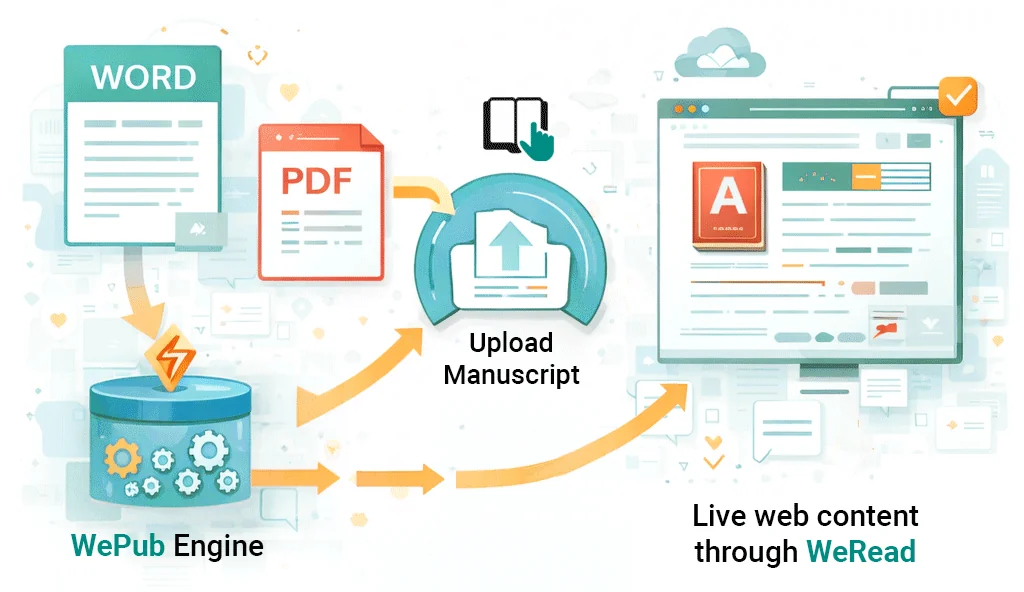
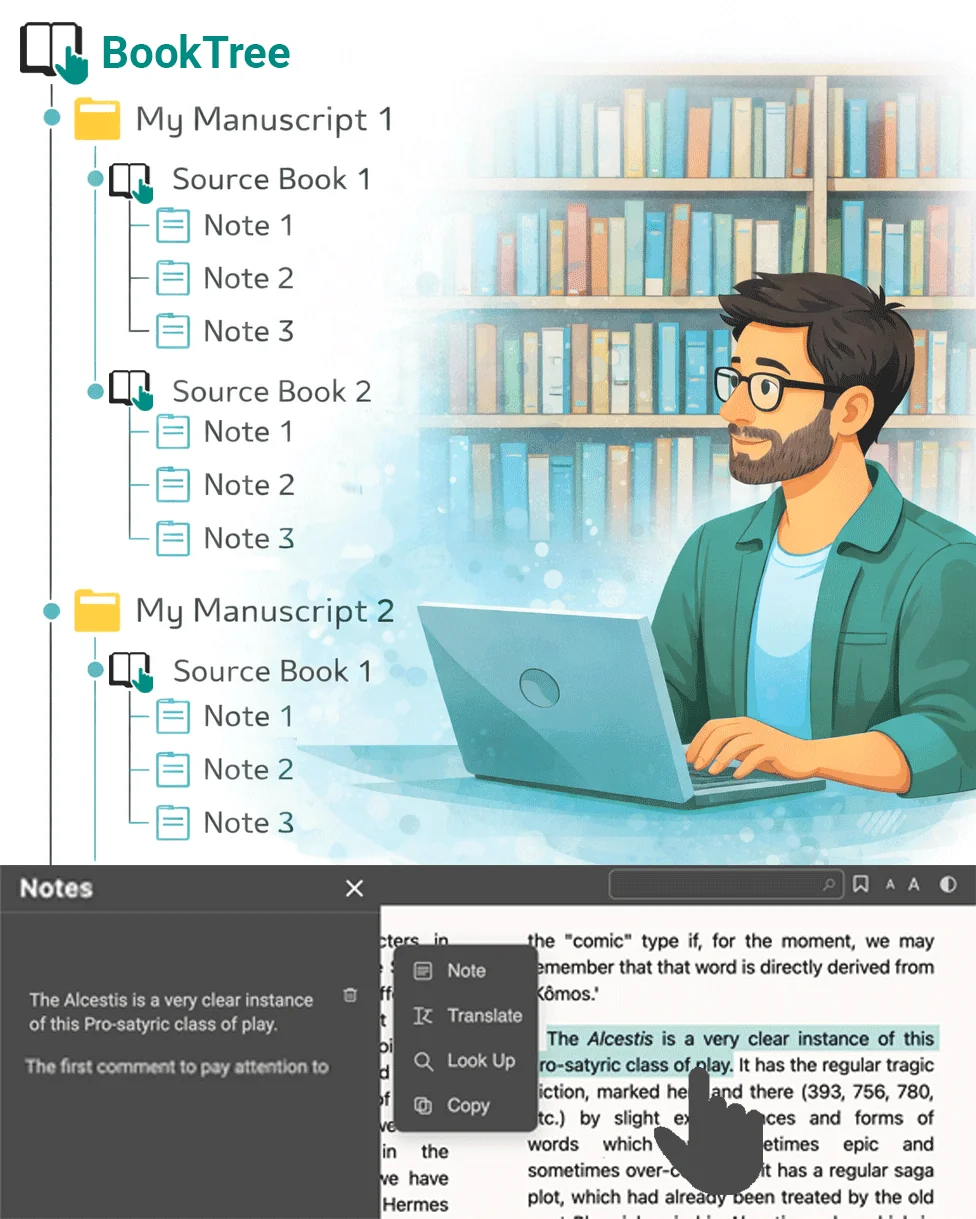
Built for web-native publishing at scale.
ReaderPub powers instant reading, structured publishing, and analytics for authors and institutions.
ReaderPub supports web publishing plus commerce: low-commission sales and connected analytics.
The same publishing pipeline can output both a web-accessible edition and a production-ready EPUB.
For protected distribution, ReaderPub’s primary access model is web-native rather than file-native: readers access content in the browser instead of receiving a standard downloadable book file. Web-accessible edition is fully protected from copying or downloading.
Access control is enforced at the platform level, allowing institutions to define how content is distributed across users and teams.
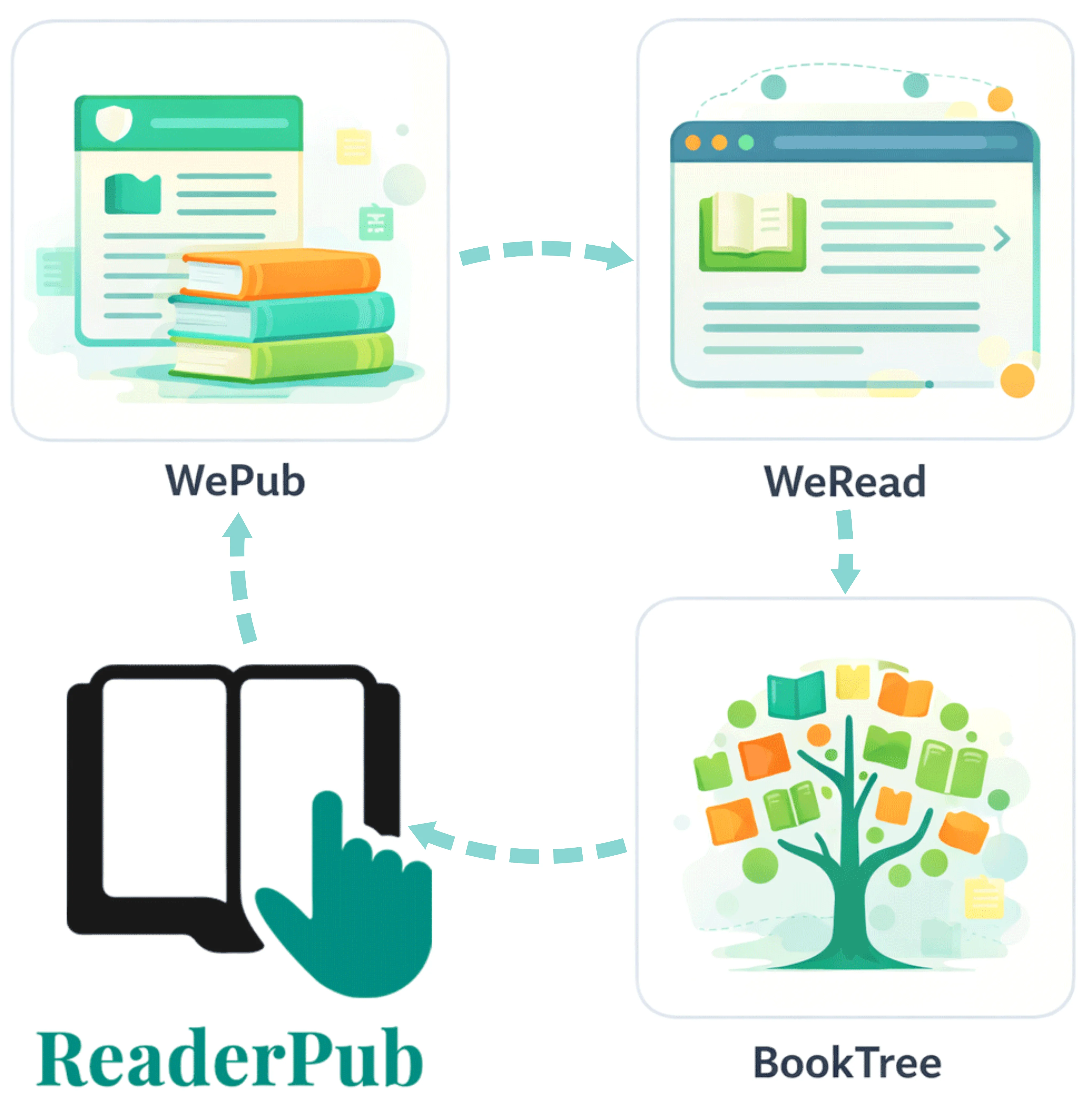
What powers ReaderPub
WePub
Web publishing and distribution for authors and institutions.
BookTree
Sources, excerpts, and structured work across texts.
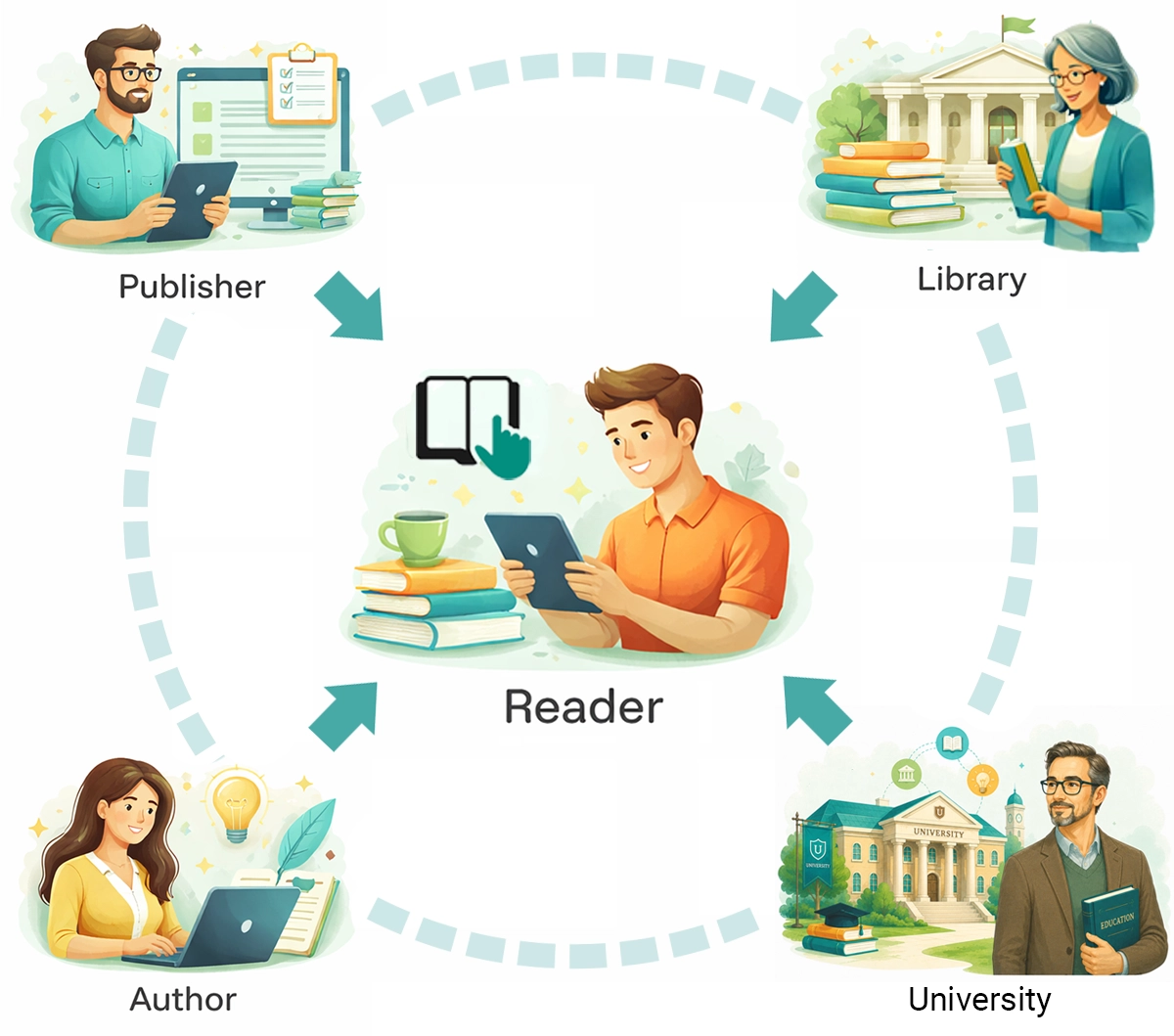
Reader collaboration and accessibility
Collaborative annotations workflow
ReaderPub supports chain-sharing of annotated books: reader → author/reader → next participants, preserving evolving notes.
Native device TTS playback
ReaderPub uses system voices installed on the user’s device for fast, low-friction read-aloud.
Built for scale
A modern foundation for public and professional reading at scale.
- Web-native reading — fast, accessible reading in the browser. No apps, no downloads.
- Designed for real catalogs — works with large, structured collections.
- Reader-first experience — clean typography and deep navigation for long-form reading.
Why this matters
Flexibility and access for every audience.
- No proprietary apps required
- No lock-in to a single deployment model
- Suitable for libraries, universities, publishers, and public organizations
- Scales from public catalogs to institutional programs
- Built for institutions — supports public access and controlled publishing programs.