Knowledge base
Short answers about ReaderPub.
ReaderPub is a web-native publishing network.
Use this page as a knowledge base for product, publishing, security and pricing features of the platform.
If you haven't found a suitable answer here, ask our team.
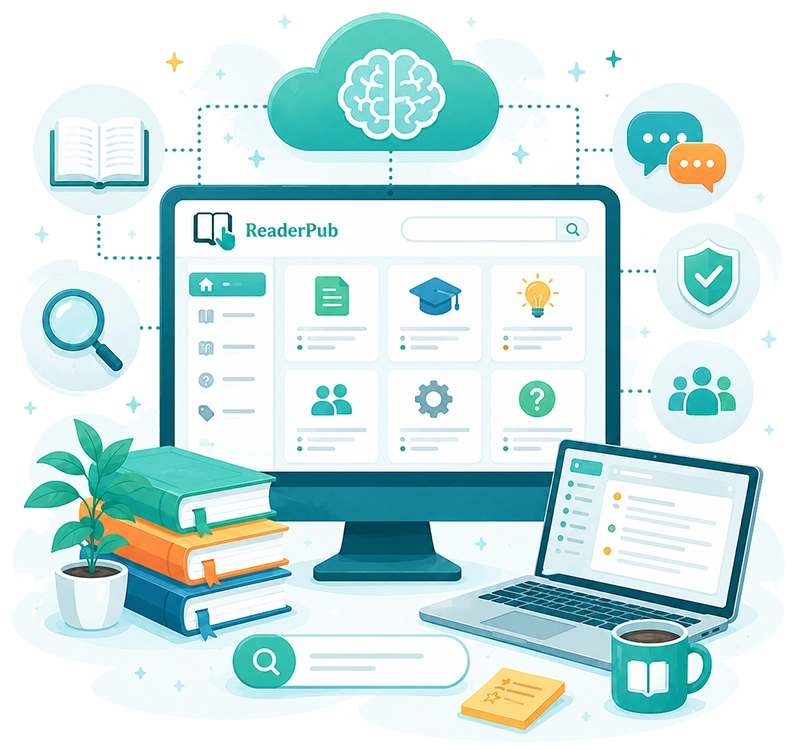
ReaderPub Platform
What is ReaderPub?
ReaderPub is a web-native publishing network that turns books and knowledge publications from static files into live web assets that can be read, searched, discussed, shared and connected to readers.
What does web-native publishing mean?
Web-native publishing means a book or publication opens directly in the browser, has a web presence, and can stay connected to discovery, discussion, author presence and audience activity.
Is ReaderPub only an ebook store?
No. ReaderPub includes publishing, reading, discussion and knowledge layers. Commerce is part of the model, but the larger goal is keeping publications active on the web.
What products are included in ReaderPub?
ReaderPub includes WePub for publishing, WeRead for browser-based reading, WeBuzz for book discussion and discovery, and BookTree for structured notes, excerpts and research.
What makes ReaderPub different from traditional digital publishing?
Traditional publishing often ends with file delivery. ReaderPub keeps books and publications readable, searchable, discussable and connected after release.
For Readers
How can I start reading on ReaderPub?
Open the ReaderPub catalog, choose a book, and start reading directly in WeRead, ReaderPub's browser-based reading layer. No separate reading app is required.
How large is the ReaderPub catalog?
ReaderPub includes a catalog of more than 60,000 books, including public-domain works available for browser-based reading.
What is WeRead?
WeRead is ReaderPub's browser-native reader. It lets books open from a link and keeps reading connected to notes, discussion, discovery and community.
Do I need to download books before reading?
No. ReaderPub is designed for web reading. Books can open directly in the browser, so readers can start immediately without downloading a separate file.
Is ReaderPub free for readers?
Public-domain books can be read free of charge. Access to commercial books depends on the author's or publisher's pricing.
For Authors &Publishers
What is WePub?
WePub is ReaderPub's publishing layer. It helps authors and publishers create web-native publications instead of relying only on downloadable files.
Why is ReaderPub different for authors?
Most marketplaces sell books but keep the customer relationship. ReaderPub is designed to help authors keep a stronger connection to readers after publication.
Can authors still use EPUB files?
Yes. ReaderPub can support EPUB generation when authors or publishers need files for external distribution, archival use or other publishing workflows.
How does ReaderPub help with reader relationships?
Books can remain readable, searchable, discussable and connected to author activity after release, instead of disappearing into a marketplace account after purchase.
How are authors and publishers charged?
ReaderPub uses creator-friendly pricing, including a 5% platform commission for direct sales and optional monthly plans for larger catalogs.
For Organizations &Education
Why do institutions need ReaderPub?
Many institutional collections are stored online but remain difficult to find, read and discuss. ReaderPub helps turn collections into useful web-native publications.
What can institutions publish?
Libraries, universities and public organizations can publish books, archives, research, reports, educational materials, course content and public collections.
How does ReaderPub help educational use?
ReaderPub makes materials easier to open, read, organize and discuss, helping students, instructors and research communities use publications more actively.
Can institutions manage large collections?
Yes. ReaderPub is designed to support institutional catalogs, collection management, controlled access and long-term publication infrastructure.
How are organizations priced?
Organizations use separate institutional plans based on collection scale, storage, access needs, support and deployment requirements.
ReaderPub Security
How does ReaderPub protect publications?
ReaderPub focuses on controlled browser access rather than routine file handoff. This helps reduce the risks created by distributing complete reusable files.
What is the difference between file protection and access protection?
File protection tries to protect a file after delivery. Access protection controls how readers reach and use a publication before a reusable file is exposed.
Does ReaderPub support protected books?
Yes. ReaderPub supports protected reading through controlled web access for commercial books, institutional materials and restricted collections.
How does ReaderPub help reduce piracy risk?
ReaderPub can keep protected books inside a controlled browser reading environment and uses ReaderPub protection mechanisms such as Theft Guard to reduce unauthorized copying and redistribution.
Can institutions control access to content?
Yes. Institutions can use access rules for public, private, paid or restricted materials depending on their publishing needs.
WeBuzz Community
What is WeBuzz?
WeBuzz is ReaderPub's community and discussion layer for books. It connects conversations around books, authors, passages, ideas and reading communities.
Why does the book industry need WeBuzz?
Book discussion is scattered across reviews, Reddit, Facebook, Discord and private groups. WeBuzz keeps conversation closer to the publication itself.
What can readers discuss on WeBuzz?
Readers can discuss complete books, authors, specific passages, literary ideas, recommendations and broader reading topics.
Who can use WeBuzz?
Readers, authors, publishers, libraries, universities and public communities can use WeBuzz to keep discussion attached to books and publications.
How does WeBuzz help discovery?
WeBuzz lets discovery come from readers, conversations and communities, not only from marketplace rankings or algorithms.
Need a direct answer?
If you haven't found a suitable answer here, ask our team.